Tuesday, January 4, 2011

O Little Town of Bethlehem!

Tour guides who talk non-stop drive me crazy. Unfortunately, today our guide was just that… annoying!! We escaped his banter a bit while we visited the Bethlehem Bible College, where Tim taught for a semester. BBC is the only ecumenical undergraduate/graduate religious school in Israel or Palestine. It hosts about 171 students from most of the 13 recognized indigenous Christian communities and many missionary groups. The new building out back is beautiful!

Our next stop was Bethlehem University where we had a fantastic tour from their public affairs director, Demetri Awwad. He told us that 70% of BU was Muslim, 30% Christian, and 73% of BU was women. While the university is run by Roman Catholics, it teaches classes and hosts conferences on inter-religious issues. We spent a long time talking with Father Jamal Khader who teaches the Christian pieces of these classes and learned from him a good deal about how the political situation is affecting his students.

We had lunch in Manger Square and got to visit parts of the Church of the Nativity. There were many people there (it’s getting close to Orthodox Christmas) so we weren’t able to see everything. Still, the church is beautiful and it was nice to see where Jerome and Paula worked. We also got to visit the Shepherd’s fields later in the afternoon where supposedly the shepherd’s say the angel and the star that led them to where Jesus was born. The area is preserved as a green space and is made up of many caves. It’s a beautiful place—if only our tour guide would have shut up for a moment!

After lunch we sat through a presentation by the Applied Research Institute of Palestine who tracks the land usage of Palestine and changes in the development of Israeli settlements. Their figures concerning the land usage of the segregation wall and Israeli controlled natural resources were frightening. While ARIP appears to be doing some great environmental and community work, their statistics predict an impending environmental and population catastrophe.

In the evening we met with two groups. The first group, the WI’AM Center teaches conflict resolution to Palestinians. They also offer mediation services and host cultural exchanges. The second group was the YM/WCA. Nidal Abu Zuluf had been introduced to me by a friend prior to this meeting so it was nice to meet him in person. Both groups appeared to work on education Palestinians in various peace-building skills, cultural exchanges that brought international participation and awareness of Palestine, and youth programs of sorts. Both organizations were very impressive in their service and in their hope for a peaceful Palestine.

After all this we headed out to host families. Sara and I ended up in a home with five daughters, the oldest of whom lived next door with her family. Although they spoke little English, the family was wonderful to spend time with; I really enjoyed having children laughing and running underfoot.

Monday, January 3, 2011

Do not be Afraid!

The morning is beautiful here. I haven’t be up for the sunrise in a long time. The air smells fresh and the sound of the morning birds cooing was beautiful. Taking a shower this morning was cleansing -- a baptism of sorts into the work of this adventure.

We met with two groups today: two programs of the World Council of Churches in the morning and Rabbis for Human Rights in the afternoon. By the time we finished at 3:00pm, all of us were ready for bed. Jet lag of this caliber is really kicking my butt!

The meeting this morning with Nader Hanna of the Ecumenical Accompaniment Program in Palestine and Israel (EAPPI) and with Yusef Dahar, the executive director of the Jerusalem Inter-Church Center was very informative. It was nice to start off our visits with a group with which we were somewhat familiar. The American Friends Service Committee Office used to reside with these two WCC programs, but had just moved.

Yusef Dahar gave us an overview of the work of the Inter-Church Center. The Center works as a platform to faciliate dialogue among the 13 different churches and 4 communit
ies of indigenous Israeli/Palestinian Christians. It also facilitates writing projects such as the Karios Palestine Document and different advocacy work. EAPPI works to document human rights violations and dissuade violence through means of non-violent activism. EAPPI also networks world wide with its participants to educate the world on the issues faced by Israel and Palestine.

In general we had great conversations about the work and effect of these two groups. We exchanged some different contacts and networked together. They challenged me personally to live into a witness of advocacy and call the organizations I'm involved in to see their connections to the violence happening here in the Middle East. We also talked about the escalating violence towards Christians in Egypt and Iraq and Yusef and Nader reminded us that if a two state solution would set a precedent for an Islamic and a Jewish state, where would there be room for the Christians?

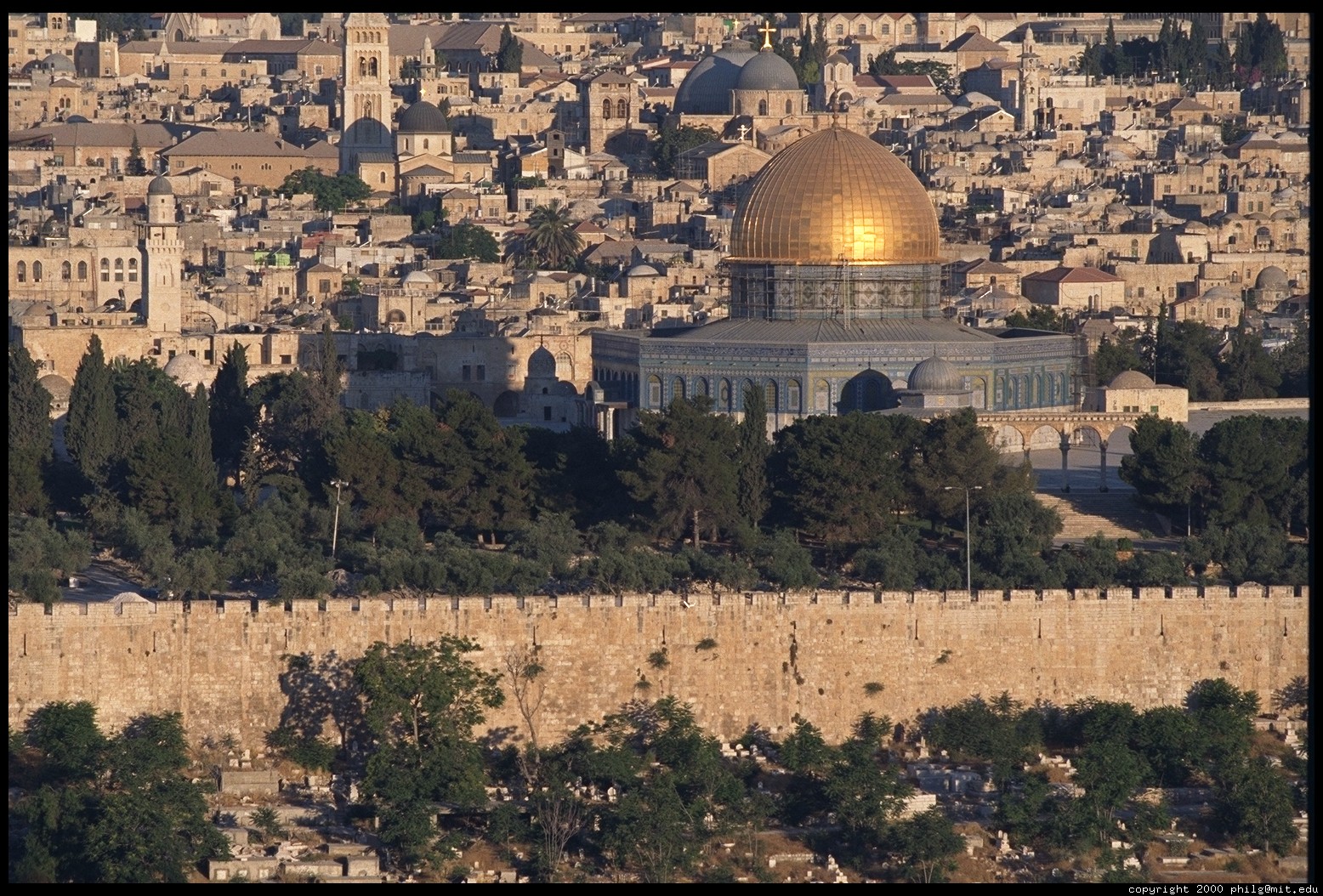
With those questions and comments jumbling around in our minds, we went for some lunch... good old falafal at a small Arab store and went to the Mount of Olives to see the city from up high. The view was beautiful! and... I did get a picture with myself actually featured! Though, while the local souvenir sellers were trying to get us to buy their wares by showing us where the famous site were... I asked our driver to show me the wall; the partisan wall that separates Bethlehem from Jerusalem. From the far west part of the Mount, we were able to find the wall sticking out of the earth like something out of a science fiction novel. My first glance at what will become a common scene along this journey.

From there we made our way to the offices of Rabbis for Human Rights. It was a very different reception, but once we started talking with the director, the conversation became lively and animated. He talked about the work of RHR as being three fold: education of youth and military on human rights (in general), economic justice for Israelis, and protecting the human rights of the Palestinian people. He argued that if the rights of the Palestinian people are respected, than Israel will be a safer place for everyone. However, there are grand misconceptions in play that make such work difficult.

RHR does some exceptional work fighting legal battles to get land back to the Palestinian people. They engage in non-violent action including placing themselves as human shields between settlers and Palestinians. RHR has helped with other issues regarding human rights and they consist of rabbis from all the different rabbinic traditions. They uphold the work of Abraham Joshua Heschel as a model for the work that they do.

In the end, the director spoke of two things that the Palestinian and Israeli people had in common: 1) they both feel deeply that they are victims and are outraged at being labeled perpetrators 2) both sides say that they want peace but the other side does not. These commonalities are exacerbated by experiences of violence, humiliation and injustice. We left with a lot to chew on...

Yet in leaving, the director of RHR told us a story. He had been called to a check point to help a escalating situation. A young Palestinian boy had been strapped to the windshield of a military vehicle while his parents had been strapped to another vehicle next to it. When the director of RHR arrived at the scene and tried to deescalate the situation, he ended up strapped to another car. The four people were used as human shields protecting the Israeli military from a group of Palestinians who were throwing rocks. Eventually the situation subsided and no one was seriously hurt, but the young boy was severally traumatized.

For many in similar situations, the experience of trauma solidifies an "us vs. them" ideology that usually perpetrates violence. Yet in this unique situation, when the Palestinian boy was interview about the incident at a much later date he said that "A tall Jewish Man in a kippa came to his rescue and told him to not be afraid." For this single child a stereotype was challenged and the situation made more complex. As I walked out of the office door I was haunted by another time the phrase "Do not be afraid" is used in religious context... in a hope for peace and unity... "Do not be Afraid, for behold, I bring you good news of great joy that will be for all the people..." (Luke 2:10)

Sunday, January 2, 2011

Shouting Stones


When Jesus descended down the path from the Mount of Olives, his followers began to shout and sing. Some of the Jewish leaders and Roman officials asked Jesus to make the crowds stop: "Teacher, order your disciples to stop!" Jesus answered, "I tell you, if these were silent, the very stones would shout out" (paraphrase of Luke 18:37-40)

We made it to Israel after a 14 hour flight. Everything went well and my own casualty is that I left my journal on the plane. Perhaps this is the universe speaking to me in metaphors, that all the many worries I have in my head are silly compared to the grander scheme of things. Whoever finds that journal, may they not be appalled by the chaos of my mind.

We were picked up at the airport after a very long wait through passport control. I befriended a young Chemistry pHD student who is living in Haifa and studying nuclear medicinal chem. He's a Arab Christian from Texas and involved a few humanitarian causes around the world. Needless to say we became fast friends which helped the impossible wait.

It was about an hour drive from the airport to Jerusalem and by that time it was very dark. Peering out through the windows of the car I could see the hills lit up by thousands of lights. Cities on a hill-- never to be hidden, not even in the dark. When we got to Jerusalem, we drove into the old city through one of the 7 gates. Of what I could see in the night, Jerusalem reminds me a bit of my time in Marrakesh, Morocco and a bit of my time in Spain. Beyond either of those comparisons though, there is a deep soul to this place. Like the stone's are speaking out.

Tomorrow, I look forward to listening to their stories.

Saturday, January 1, 2011

Reflections


Looking over the edge of the water, my reflection comes into view. The image looking back at me stretches out her hand and touches the surface. Here I am in this moment; I am a product of my past and a seed for my future. 2011 has begun!

14 months ago I left the USA and traveled to the northern part of Spain. I hiked over 500 miles from the French border to Santiago del Compostella and by such completing the Camino de Santiago. 2 months ago, I traveled to Italy to study religious history in Rome and find ‘paradise’ amongst the art in Ravenna. Today I leave the country once again to travel to Israel and Palestine, the Holy Lands, a place fertilized for centuries with human blood.

When I was a freshman in college, a beautiful friend of mine sent me a book called The Alchemist by Paulo Coelho. This book spoke of journey that uncovered the soul of the world and in such a state of beauty, happiness was found. Coelho also wrote a book titled The Pilgrimage where he mentioned three pilgrimage trails; ancient roads where seekers wrote their lives and their tears into the ground. Those three pilgrimages concluded at Santiago del Compostella, Rome and the Holy Lands.

A year and a half ago, when my life altered from its predicted course, traveling to Spain was a fulfillment of a grandiose dream of engaging in pilgrimage on a traditional scale. Little did I know that a bit more than a year later I would be completing the triad. Nor did I know I would be studying comparative mythology or asking questions regarding the use of myth and ritual in peace building!

Last semester, I did a research project on a 4th century woman who engaged in what was called wandering monasticism. Egeria traveled extensively through Europe, the Middle East and Northern Africa and while she visited many of the Christian holy places, she traveled to meet with dear friends, spread news of good works, and inspire others with her freedom. There were many other women who lived lives like Egeria and they formed a network of friendships across the continents.

In the 6th century, monasticism transformed into the cloistered lives we think of today. And while the remote romanticism of mountain top monasteries pulls me from time to time, America has instilled in me too great a sense of freedom and restlessness for such a life. Perhaps then, as a scholar of many different religious traditions, for the next month I will be more like Egeria wandering the land, visiting friends and learning as much as I can.

Thursday, December 23, 2010

Adventures Begin Again!


Well, its been two months since I've returned from Italy and about a month since I've returned from New Orleans. Add in a whole lot of a semester, and I haven't had much time to process this last bit of my life. Now that the fall semester is over, I'm finding a lot of time to curl up, sleep, and start to piece everything together.

Just in time too! After the holidays, as of January 1st, I'll be in Israel and Palestine. I'm traveling as part of a class in contextual theology and I'll be in the Middle East for the whole of January. I'll be keeping a daily (or as often as I can) account of my travels on this blog. In addition to visiting many of the holy land pilgrimage sites, my group will be meeting with various peace and inter-religious dialogue groups in both Palestine and Israel.

I'm looking forward to talking with folks about real inter-religious dialogue that is happening. A lot of my thesis work on the topic has been theoretical and I'm itching to see it in action.

Well, here's me wishing everyone a safe and happy holiday season. Keep warm! and if the snow gets too much, you can always join me in the desert! Assalamu alaikum

Thursday, November 11, 2010

When we were hungry, You feed us!

Last weekend, I spoke with Anne Bennett (see previous post for bio) at one of Friends World Committee for Consultation events in preparation for the 2012 World Conference. Anne told a story of meeting with the Dean of Trinity University in Belfast. The Dean sat on the other side of the wooden office table and tried to figure out whether Anne was Catholic or Protestant because that label would help her address Anne correctly. Anne, knowing what the Dean was doing, cut to the chase and identified herself as a Quaker. The Dean leapt out her chair, ran around to the other side of the desk and embraced Anne. She did this all while exclaiming "You were the one's that fed us! During the famine, you fed us!"

Anne told this story to illustrate the religious "credit" that the Religious Society of Friends must work to preserve. Much of the history of Quakerism has been mythologized. For example, I personally did not have a role in the underground railroad, WW2 relief work or feeding the hungry during the potato famine (not in historical order!), but when I identify as Quaker to non-Quakers, it is these stories and more that emerge as part of that Quaker identity.

I have many reflections to offer about attending the National Council of Churches Centennial Gathering in New Orleans, LA. One of those reflections is on an interaction I had with a Cuban delegation that was also present.

I was in a small group with two Cuban men discussing the Christian Understanding of War in an Age of Terrorism. I had come into the small discussion group late and joined the discussion in silence. At one point another member of the group asked me to introduce myself and when I identified as being part of the Religious Society of Friends, the two Cuban men got really excited. Through a translator they said "We love the Quakers! They feed pregnant women! The Quakers provide canned meat and vegetables to pregnant women of our churches. They are very good people!"

Being in this ecumenical environment poses its challenges and delivers gifts. I am proud of my faith community and I hope that I can live up to its reputation.

"On the last day, Jesus will say to those on His right hand, "Come, enter the Kingdom. For I was hungry and you gave me food, I was thirsty and you gave me drink, I was sick and you visited me." Then Jesus will turn to those on His left hand and say, "Depart from me because I was hungry and you did not feed me, I was thirsty and you did not give me to drink, I was sick and you did not visit me." These will ask Him, "When did we see You hungry, or thirsty or sick and did not come to Your help?" And Jesus will answer them, "Whatever you neglected to do unto one of these least of these, you neglected to do unto Me!" Matthew 25: 31-46

Thursday, November 4, 2010

Salt and Light: Traveling Among Friends

Last weekend (while still sick) I traveled to Chicago to speak at the Salt& Light events of Friends World Committee for Consultation (FWCC). FWCC is hosting a series of these events throughout the world in preparation of the 2012 World Conference of Friends which will be held in Kenya. The full theme is "Being Salt and Light: Friends Living the Kingdom of God in a Broken World."

I had/have the honor of speaking with Anne Bennett, a wise and a strong witness for peace. Her bio reads:

Anne Bennett, Britain Yearly Meeting, served as Representative (Director)of Quaker House Belfast. Quaker House was established to provide a place of "quiet diplomacy" where off-the-record meetings of politicians, paramilitaries and members of various communities in Ireland could take place. She served on the staff of the British Friends’ Quaker Peace and Service department. In that role she provided support for the Quaker United Nations Office in Geneva and was involved in peace-making in several countries that were experiencing civil war. From Beirut to Burundi, she sometimes found herself flying alone into countries just as the expatriates were being evacuated.

Anne and I spoke last weekend at Lake Forrest Monthly Meeting and at Downers Grove Monthly Meeting, outside of the Chicago area. I had the opportunity to experiment with Biblical story telling and brought the participants back to the turn of the century 100 A.D. as well as back at to be beginning of Quakerism in the 1650's. Speaking on the passage about Salt and Light in Matthew 5:13-16, I helped lay the theological and historical foundation for Anne's stories of being Friends in a broken world.

As I heard Anne tell her stories about working in Northern Ireland and around the world, I found myself hoping and praying that I too may be blessed to witness such transformational experiences. It has been a gift to support her in her ministry while also developing my gifts and voice among Friends.

We travel to Indianapolis tomorrow (I'm just about recovered from my cold!) to speak with Indianapolis First Friends Church. I'm keeping my fingers cross that I can finish all my school work in time and find moments during my travels to keep up with my classes.

Next stop? New Orleans, Louisiana for the Centennial Gathering of the National Council of Churches.